Your HOA Could Own the Internet: Inside America's Shared Fiber Experiments
Picture the scene: a Tuesday night homeowners association meeting in suburban Ohio. Someone moves to approve the landscaping contract. Someone else complains about trash pickup. And then the board president pulls up a spreadsheet showing the neighborhood's collective plan to build its own fiber network.
Sound far-fetched? It's happening more often than you'd think — and it might be the most interesting thing to hit American broadband in a decade.
What Exactly Is a Shared Fiber Pilot?
The concept is simple enough to explain at a backyard barbecue. Instead of each household paying a national provider $70 a month for a mediocre connection, a group of neighbors — sometimes a dozen homes, sometimes a few hundred — pool their money to fund the 'last mile' of the network. That's the physical cable running from the neighborhood to the wider internet.
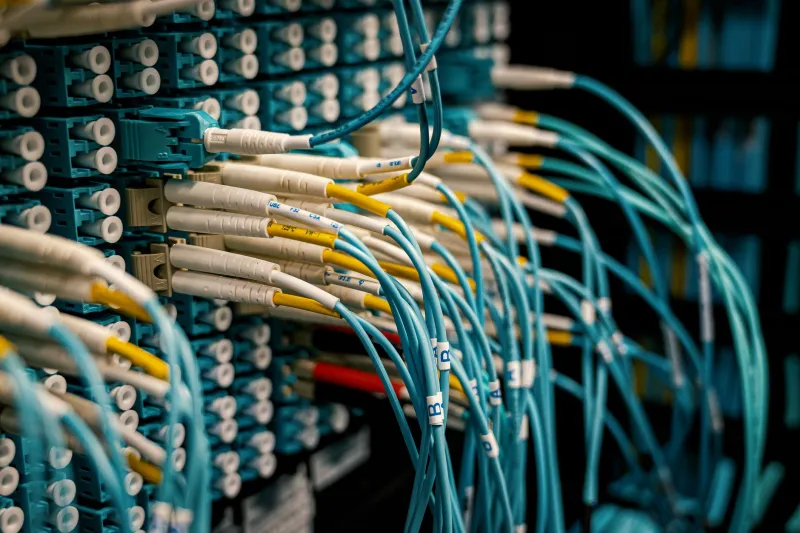
Think of it like a shared driveway. Everyone chips in for the asphalt, splits the maintenance, and enjoys the benefit. In this case, the asphalt happens to be fiber optic cable capable of delivering symmetrical gigabit speeds.
The model sits somewhere between a rural electric cooperative and a bulk-buying club. Households typically form a legal entity — often through an existing HOA or a newly created nonprofit — that contracts with a wholesale internet provider or an open-access fiber carrier for the actual bandwidth.
The Early Experiments
Several pilots across the country are proving the concept, drawing inspiration from the municipal fiber successes we've covered before in places like Chattanooga, Tennessee.
In parts of Utah and Colorado, developer-built 'dark fiber ready' subdivisions have handed network ownership to community associations rather than a single carrier. In older neighborhoods, some residents have negotiated with open-access providers to light up shared conduit installed decades ago. And in a handful of rural pockets, small groups of neighbors have crowdfunded wireless links as a stopgap while pursuing fiber grants.
The common thread? Nobody's waiting for a national provider to draw their neighborhood on the expansion map. They're drawing it themselves.
The Legal Hurdles Are Real
Here's where the Tuesday night meeting gets contentious. Forming a shared network entity means navigating state rules on homeowner associations, utility easements, and in some states, restrictions on community broadband that were lobbied into law by incumbent providers.
A few things every aspiring neighborhood network needs to sort out:
- Governance. Who decides on upgrades, budget shortfalls, and acceptable use? An HOA already has bylaws; a new entity needs to write them.
- Easements. Fiber has to cross property lines. That means recorded easements, title work, and occasionally an awkward conversation with the neighbor who 'doesn't want wires near his tomatoes.'
- Liability. If the shared switch dies at 2 a.m., who's on the hook? Many pilots carry insurance and maintenance contracts similar to shared pools or private roads.
None of this is insurmountable — neighborhoods already manage shared roads, water systems, and gates. But it's paperwork, and paperwork scares off more projects than money does.
The Math (Roughly)
Costs vary wildly by geography, but here's a ballpark. Aerial fiber builds might run $1,500 to $3,000 per home passed in friendly conditions; underground trenching in rocky soil can push well past $5,000. Spread across 40 households, that's a serious but not absurd capital raise — especially when compared to a decade of monthly bills.
The long-term economics are where it gets compelling. Once the build is paid off, the neighborhood's ongoing cost is wholesale bandwidth plus maintenance, which can be a fraction of retail pricing. Some pilots estimate residents save 40 to 60 percent annually after the first few years.
The Town Hall Has Moved Online — Sort Of
There's a bigger idea lurking under the spreadsheets and easement documents. For most of the last century, decisions about essential services happened in town halls and utility commissions. Broadband, meanwhile, arrived as a take-it-or-leave-it subscription.
Community fiber pilots drag internet back into the realm of civic decision-making. Your connection speed becomes something you vote on. Your monthly rate gets debated next to the pool maintenance budget. It's broadband democracy at the smallest possible scale — and honestly, that's kind of beautiful.
Is every neighborhood cut out for this? No. It requires engaged residents, patient capital, and a board willing to learn what an OLT is. But as a proof of concept for what communities can do when providers won't come, these pilots deserve a whole lot more attention.
Would your HOA take the plunge? The comment section, as always, is open.