The Gigabit Hometown: How Chattanooga and a Thousand Co-ops Beat the 'Radical' Label
Every so often, a state legislature passes a bill restricting cities from building their own internet networks, and the press release describes it as protecting taxpayers from "government-run broadband." The framing is deliberate. It paints community broadband as some fresh-faced socialist experiment — a radical departure from the American way.
Here's the thing: it isn't. Community-owned networks are about as American as a barn raising. In many cases, they're literally built on barn-raising institutions. And if you care about connectivity — as everyone reading this site presumably does — the history and the current boom deserve a closer look.
Chattanooga Didn't Invent This. Farmers Did.
The modern community broadband story usually starts with Chattanooga, Tennessee, and its electric utility, EPB. In the late 2000s, EPB began building a fiber-optic network across its service area, initially to modernize the electric grid. By 2010, it was offering internet to residents, and today Chattanooga boasts some of the fastest and most affordable gigabit service in the country. It's become the poster child — so much so that when EPB wanted to expand into neighboring counties, it ran headlong into state laws backed by incumbent providers.
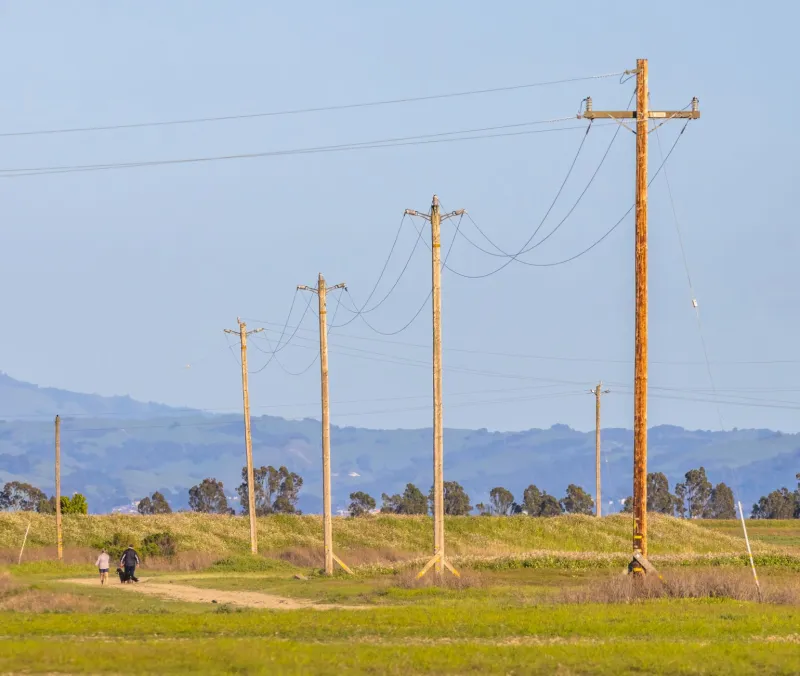
But municipal networks predate Chattanooga by decades, and cooperative networks predate municipal ones. In the 1930s and '40s, when private electric utilities decided wiring rural America wasn't profitable, farmers formed electric cooperatives under the Rural Electrification Administration. They strung their own poles, ran their own lines, and lit up the countryside. Millions of Americans still get their power from those co-ops today.
Now history is rhyming. Rural electric co-ops, tired of waiting for broadband that never came, are running fiber along the same poles their grandparents built. Co-ops in states like Minnesota, Kentucky, and the Carolinas are lighting up members who, until recently, had two choices: satellite internet or nothing.
Why the 'Radical' Label Sticks
If community broadband is a century-old tradition, why does it keep getting framed as fringe?
Follow the money, mostly. Incumbent providers have a legitimate business interest in limiting competition, and state-level restrictions on municipal networks — some twenty-odd states have them in various forms — reflect decades of effective lobbying. The argument is always the same: government shouldn't compete with private business, and taxpayers will get stuck with the bill if it fails.
There's a fair conversation to be had about that. Municipal networks can go badly. Some early projects struggled with debt, and a city that mismanages a broadband build-out absolutely can leave taxpayers holding the bag. Skepticism of any large public investment is healthy, and this site isn't in the business of pretending otherwise.
But the track record cuts the other way more often than critics admit. Chattanooga's EPB network is widely considered a success story that helped attract jobs and tech investment to a mid-sized Southern city. Municipal fiber in places like Lafayette, Louisiana, and Longmont, Colorado, has delivered competitive pricing in markets that previously had little. And co-ops, by their structure, don't depend on pleasing shareholders — they answer to the members who subscribe.
The deeper point is this: community broadband isn't a rejection of markets. It's a response to market failure. Private providers didn't skip rural America out of malice; they skipped it because the math didn't work. When the private market declines to serve a community, that community building its own network isn't radical. It's the same logic that brought electricity, telephones, and paved roads to places the market initially ignored.
What It Means for Consumers
For the average household, the arrival of a community network tends to produce a familiar pattern: better speeds, lower prices, and — often within months — a sudden interest from the incumbent provider in your neighborhood. Competition, even the threat of it, changes behavior.
There are practical wins for tech-minded folks, too. Municipal and co-op networks frequently offer symmetric speeds — upload as fast as download — which matters enormously if you're self-hosting, backing up to the cloud, video conferencing, or running any kind of home lab. Most cable plans still treat upload speed as an afterthought. Fiber co-ops usually don't.
And because these networks tend to be built on modern fiber rather than legacy copper, latency and reliability are often better than what cable delivers. Ask anyone who's moved from a congested coax connection to a dedicated fiber line — it's not an incremental upgrade. It's a different experience.
The Road Ahead
Federal infrastructure money is flowing, and a meaningful chunk of it is designed to reach communities the big providers have long overlooked. Co-ops and municipalities are among the entities best positioned to use it, because they already exist, already know their communities, and don't need to promise shareholders a return.
The battles over state restrictions will continue, and reasonable people can debate the right mix of public and private provision. But let's retire the word "radical." A farming co-op stringing fiber on poles its members built in 1940 isn't a radical experiment. It's the most traditional thing in the world: a community, seeing a need, doing the work itself.
The next time someone tells you community broadband is government overreach, ask them how they feel about rural electrification. Then ask why the town down the road has gigabit fiber and theirs doesn't.