The Ghost in the Grid: Chasing the Mid-Afternoon Outage Nobody Talks About
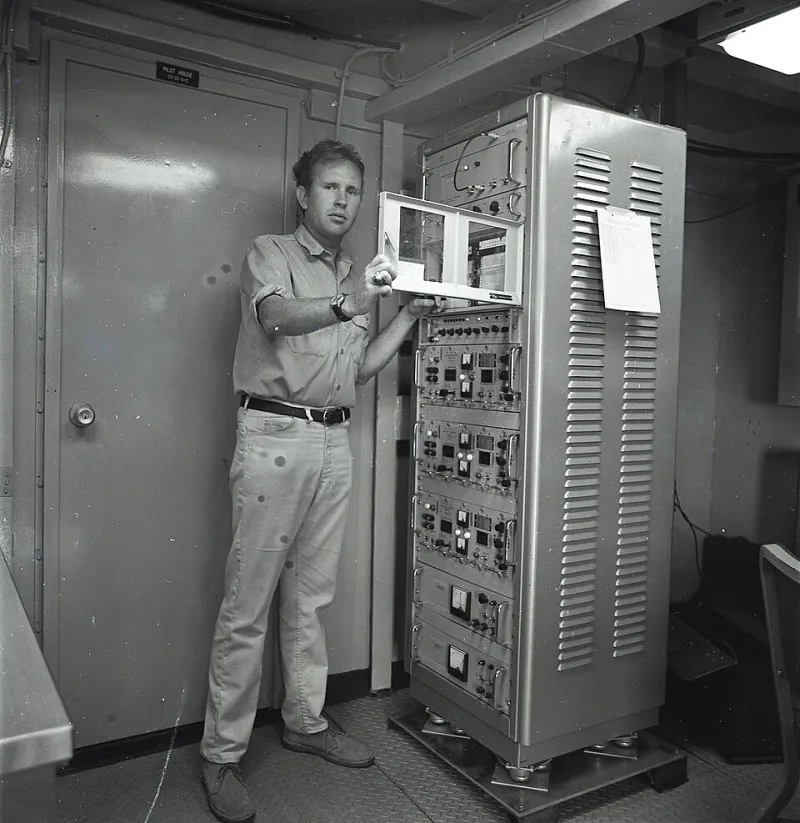
Photo: Credit Line: AIP Emilio Segrè Visual Archives, Gift of Bill Woodward, USNS Kane Collection, CC0, via Wikimedia Commons
There's a particular kind of frustration that comes with an internet outage at 2 PM on a Tuesday. Nobody's streaming. The kids are at school. Your smart thermostat is the most demanding device in the house. And yet, there it is — the spinning wheel, the dead video call, the smart doorbell that won't load its feed.
If you've experienced this, you're not imagining things. And no, it's probably not your router.
The Myth of the Empty Network
We've all internalized the idea that networks get congested in the evening — the so-called "internet prime time" between 7 and 11 PM, when everyone in America fires up Netflix simultaneously. ISPs provision their networks around this peak, which is why they love quoting you speeds measured at 2 AM on a Sunday.
But here's what the prime-time framing hides: mid-afternoon is when a different kind of problem shows up.
"Evening congestion is a capacity problem," explains a field technician for a regional cable provider in Ohio, who asked not to be named because he wasn't authorized to speak for his employer. "Afternoon outages are usually an infrastructure problem. Heat, power fluctuations, construction crews with backhoes. The network is quiet, so when something breaks, there's nothing masking it."
In other words: at 9 PM, a degrading node might just make everyone's video buffer a little. At 2 PM, that same failure takes your connection down entirely — because there's no traffic to hide behind.
Why Afternoons Are Secretly Brutal on Equipment
There are a few reasons the 1-to-4 PM window is uniquely hostile to your connection:
Heat is the big one. Outdoor network equipment — the amplifiers, nodes, and power supplies that live on utility poles and in sidewalk pedestals — bakes in the afternoon sun. Electronics that were marginal at 8 AM start failing around 2 or 3 PM as temperatures peak. This is why so many neighborhoods see recurring afternoon outages in July and August, especially in Sun Belt states like Arizona, Texas, and Florida.
Utility work happens while you're at work. Crews dig, trim trees, and upgrade power lines during business hours. Every accidental fiber cut is an afternoon outage for someone.
Maintenance windows sneak into the day. Not all scheduled work happens at 3 AM. Software pushes and node upgrades frequently run midday, when engineers assume residential impact will be minimal — a calculation that doesn't account for remote workers, delivery drivers relying on apps, or smart home systems.
The remote work shift changed the math. The old assumption that homes are empty at 2 PM is simply out of date. Millions of Americans now depend on their residential connection for a 2 PM client call, which means an afternoon blip that used to be invisible now tanks someone's livelihood.
What the Provisioning Model Gets Wrong
Here's the uncomfortable truth buried in all this: residential internet in the US is sold on the premise of sharing. That 500 Mbps plan you have? The provider assumes you won't use it all the time, and neither will your neighbors. Capacity is provisioned against predicted peak demand, not guaranteed throughput.
That model works reasonably well for evening streaming. But it falls apart when usage patterns change — like when an entire subdivision of remote workers starts hammering upload bandwidth at 10 AM and 2 PM for video conferences. Upload capacity, historically treated as an afterthought on cable networks, becomes the bottleneck.
"We see it constantly," says the Ohio tech. "Retiree neighborhoods, work-from-home subdivisions — the afternoon is their peak. The provider's models still say evening. So the customer gets told 'everything looks fine on our end' while their calls drop every day at 1:30."
Diagnostics You Can Run Before You Blame Your Router
Before you call your ISP (or worse, buy new equipment), work through this checklist:
1. Track the pattern. Note exactly when slowdowns and drops occur for a week. If failures cluster between 1 and 4 PM on weekdays, you're likely looking at heat-related infrastructure issues or provisioning mismatches — not your gear.
2. Check your modem's signal levels. Log into your cable modem's diagnostic page (usually 192.168.100.1) and look at signal-to-noise ratio and power levels. Levels that drift worse through the day point to temperature-sensitive equipment outside your house.
3. Run tests on a wired connection. Wi-Fi adds variables. Plug directly into your router and run speed tests at different hours. If wired speeds crater at 2 PM, the problem is upstream of you.
4. Compare wired and Wi-Fi results. If wired is fine but Wi-Fi suffers, congratulations — it really might be your router. Older access points throttle under sustained heat, too, especially ones stuffed inside a cabinet.
5. Check your ISP's outage map and neighborhood forums. Sites like DownDetector, your provider's own status page, and local Facebook or Nextdoor groups will reveal whether neighbors are seeing the same pattern. Shared symptoms mean shared infrastructure — and that's the ISP's problem, not yours.
6. Document everything. If you can show a consistent daily pattern, you have leverage. Providers can't dismiss "it dies every afternoon" the way they can brush off a one-off complaint. Persistent, documented issues can justify a technician visit, a line replacement, or in stubborn cases, a complaint filed with your state's utilities board or the FCC.
The Bigger Picture
The afternoon outage is a small window into a larger tension in American broadband: networks built around assumptions that are quietly expiring. The 9-to-5 empty house, the evening-only peak, the home as a consumption endpoint rather than a workplace — all of it is shifting, and infrastructure and policy are lagging behind.
So the next time your connection dies at 2 PM in an empty house, take it as a data point. Track it, test it, document it. The ghost in the grid is real — and it keeps a schedule.