Scrap Metal and Signal: Meet the Tinkerers Building Real Networks Out of Almost Nothing
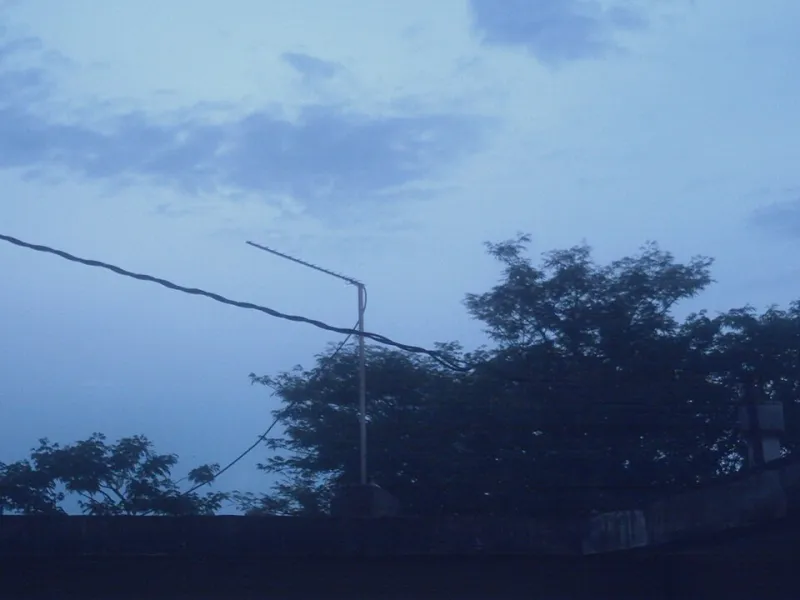
Photo: Sergio alejandro, CC BY-SA 3.0, via Wikimedia Commons
There's a particular kind of satisfaction in making something work when the odds — and the budget — say you shouldn't. Ask anyone in the budget homelab crowd and they'll tell you the same thing: the best gear isn't always the gear you buy new.
Take Marcus Delgado, a warehouse supervisor outside Columbus, Ohio, who links his house to his mother-in-law's place two doors down using a repurposed satellite dish, a $35 router flashing open-source firmware, and a length of PVC pipe. Total cost, including the mounting hardware: a hair over $80.
"People assume you need enterprise stuff," he told us over a video call that, fittingly, was riding on his own homemade link. "But a dish is a dish. The physics doesn't care what you paid for it."
The Scrap Bin Is the New Server Room
The budget homelab underground thrives on what everyone else throws away. Old satellite TV dishes become point-to-point Wi-Fi reflectors. Decommissioned office PCs pulled from Craigslist's free section become firewalled routers. Even the humble cantenna — a directional antenna built from, yes, an actual can — still shows up in builds across rural America, where the nearest fiber drop might be a cornfield away.
Part of this is necessity. Rural broadband gaps mean some folks literally can't buy their way to a decent connection, so they build one. But a bigger part is just the fun of it. There's a whole community on forums and subreddits trading antenna math, dish aiming tips, and thrift store scores like they're fishing stories.
Your Weekend Project: A Sub-$100 Point-to-Point Link
Want to try it yourself? Here's the skeleton of a classic weekend build — a wireless bridge between two buildings, like a house and a garage, workshop, or neighbor's place (with permission, obviously).
What you'll need:
- Two cheap routers that support open-source firmware (used units often run $20–$40 each)
- A dish or other parabolic reflector — old satellite dishes work, and so does a metal wok if you're feeling brave
- Coax-to-USB or pigtail cabling, roughly $15
- PVC pipe and zip ties for mounting, about $10
- An afternoon and a helper to stand outside saying "better? worse? better?"
The walkthrough:
First, flash your routers with open-source firmware like OpenWrt. This unlocks the ability to run them in wireless bridge mode and tweak power and channel settings the stock firmware hides from you. Check the compatibility list before you buy — not every model plays nice.
Second, mount your reflector. The dish acts as a mirror, concentrating the radio signal into a tight beam. Aim it at the second building, line of sight being the golden rule. A tree in the wrong place will ruin your day faster than any equipment failure.
Third, configure one router as the access point and the other as the client, lock them to the same channel, and turn the transmit power down rather than up. More power isn't better — it's noise. A clean, focused link beats a loud, sloppy one.
Fourth, test. Then re-aim. Then test again. Antenna alignment is 90% patience, 10% hardware.
The Receipts: What $100 Actually Buys
We asked Delgado to break down his build, and the numbers are almost embarrassing:
- Two used routers: $70
- Repurposed satellite dish: free (curb pickup)
- Mounting hardware and cabling: $22
- Total: $92
That link now carries streaming video, a VoIP phone line, and a backup internet connection for both households. Compare that to the monthly cost of a second broadband subscription and the payback period is measured in weeks, not years.
Not every build goes this smoothly, of course. Weather, interference from neighbors' networks, and the occasional squirrel-related outage are all part of the learning curve. But that's half the appeal. A homelab built from scrap teaches you more about how networking actually works than any all-in-one mesh kit ever will.
Why It Matters
There's a quiet lesson in the budget homelab underground: connectivity is increasingly something people can build, not just buy. In a country where millions still lack reliable internet, a $92 link between two houses isn't just a hobby — it's a tiny act of infrastructure.
So before you shell out for the shiny new flagship router, take a look in the garage. The parts of your next network might already be there, gathering dust and waiting for a weekend.